Summary
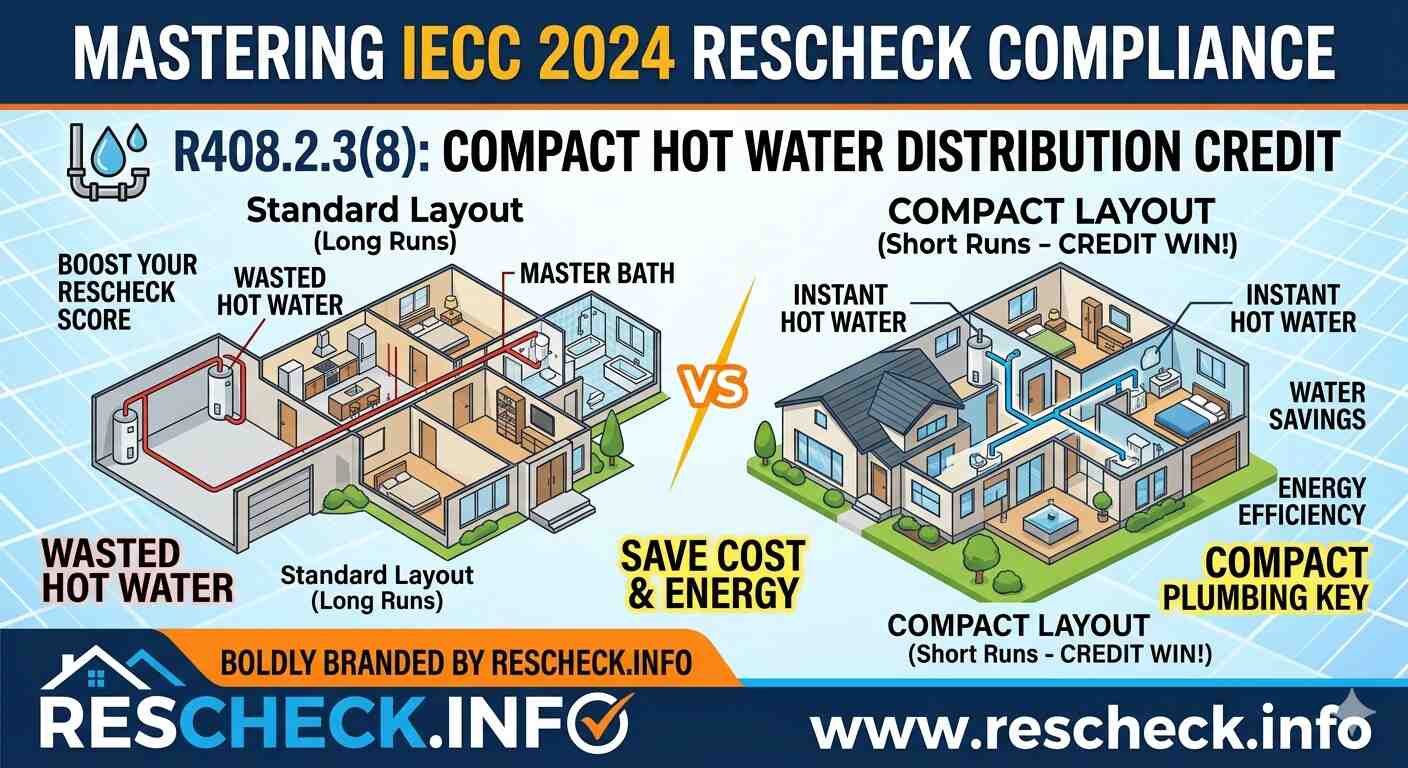
This blog post provides a technical yet accessible overview of the IECC 2024 energy code, specifically focusing on how to use the Compact Hot Water Distribution credit to pass a Rescheck report.
Key Takeaways
The Goal: The credit rewards home designs that minimize the distance between the water heater and the fixtures to reduce water and energy waste.
Compliance Strategy: Utilizing credit R408.2.3(8) is highlighted as a cost-effective alternative to more expensive upgrades like high-end windows or HVAC systems.
Implementation: Builders can achieve this through "vertical stacking" of wet rooms (placing bathrooms above kitchens) and centralizing mechanical closets.
End-User Benefits: Beyond meeting code, this design leads to faster hot water delivery and lower utility bills for the homeowner.
Streamlining Efficiency: Understanding the Compact Hot Water Distribution Credit in IECC 2024
About the Author
Jobe Leonard Rescheck.info
Jobe Leonard is the founder of Rescheck.info and a dedicated specialist in the field of building performance. With a passion for energy conservation, Jobe focuses on the technical nuances of home energy audit software, including Rescheck, Comcheck, and Manual J heat loss/gain calculations. Through his work, he helps builders and designers navigate the evolving landscape of energy codes to create more efficient, compliant homes.
As the 2024 International Energy Conservation Code (IECC) rolls out, residential designers and builders are looking closely at the R408 section. This section focuses on additional efficiency packages required to push a home’s performance beyond the baseline.
One of the most practical and impactful options within this suite is Credit R408.2.3(8): Compact Hot Water Distribution. While it might sound technical, the core philosophy is simple: reduce the distance water has to travel from the heater to the fixture.
What is Compact Hot Water Distribution?
In many modern homes, sprawling floor plans result in long pipe runs. This leads to “structural waste”—the gallons of cold water you flush down the drain while waiting for the shower to get warm.
The Compact Hot Water Distribution credit rewards designs that minimize this waste by keeping the water heater centrally located relative to the high-use fixtures (kitchens, bathrooms, and laundries).
How the Credit Works in Rescheck
When performing a Rescheck calculation under the 2024 IECC, you must select a certain number of credits to achieve compliance. Choosing the compact distribution credit can be a “budget-friendly” way to pass without having to upgrade to more expensive options like triple-pane windows or ultra-high-efficiency HVAC systems.
To qualify for this credit, the plumbing system must meet specific piping length requirements:
-
The length of the piping from the water heater to the furthest fixture must not exceed a specified threshold based on the floor area.
-
The calculation is typically based on the weighted average of the distance to all fixtures or a strict maximum length for the “primary” fixtures.
Benefits Beyond Compliance
While the primary goal of selecting this credit is to hit your Rescheck targets, the real-world benefits for the homeowner are significant:
-
Water Conservation: Thousands of gallons are saved annually by reducing the “wait time” for hot water.
-
Energy Savings: Less energy is wasted heating water that eventually cools down inside the pipes after the tap is turned off.
-
Improved Comfort: There is nothing more frustrating for a homeowner than waiting two minutes for hot water in a master bath. Compact designs provide nearly instant gratification.
Design Tips for Success
If you are aiming for the R408.2.3(8) credit, keep these strategies in mind during the schematic design phase:
-
Vertical Stacking: Place bathrooms on the second floor directly above the kitchen or first-floor laundry.
-
Centralized Mechanicals: Avoid placing the water heater in a far corner of the garage. A central mechanical closet is often the best way to ensure all runs remain short.
-
Consider Multiple Heaters: In very large homes, it may be more efficient to use two smaller water heaters (or tankless units) located near separate “clusters” of fixtures rather than one central unit with massive pipe runs.
Final Thoughts
The 2024 IECC is moving the needle toward more holistic home efficiency. By focusing on the Compact Hot Water Distribution credit, you aren’t just checking a box in your Rescheck software—edging closer to a more sustainable, comfortable, and cost-effective home for the end user.
If you need a Rescheck email pdf plans, jobsite address, and square footage to service@rescheck.info and we will create it for you.