Summary
Rescheck vs. HERS Rating: What's the Difference?
Rescheck vs. HERS Rating: Understanding the Difference
This article was written by Jobe Leonard who is enthusiastic about Reschecks and Rescheck reporting.
Rescheck.info offers Rescheck reports, but we do not offer HERS ratings so we thought it was important to describe the differences to our Reschexpert blog readers.
Could your holiday decorations act as additional insulation?
When it comes to evaluating a home’s energy efficiency, two common terms often arise: Rescheck and HERS Rating. While both systems assess a building’s energy performance, they have distinct differences. Let’s delve into the key differences between these two rating systems.
What is a Rescheck Report?
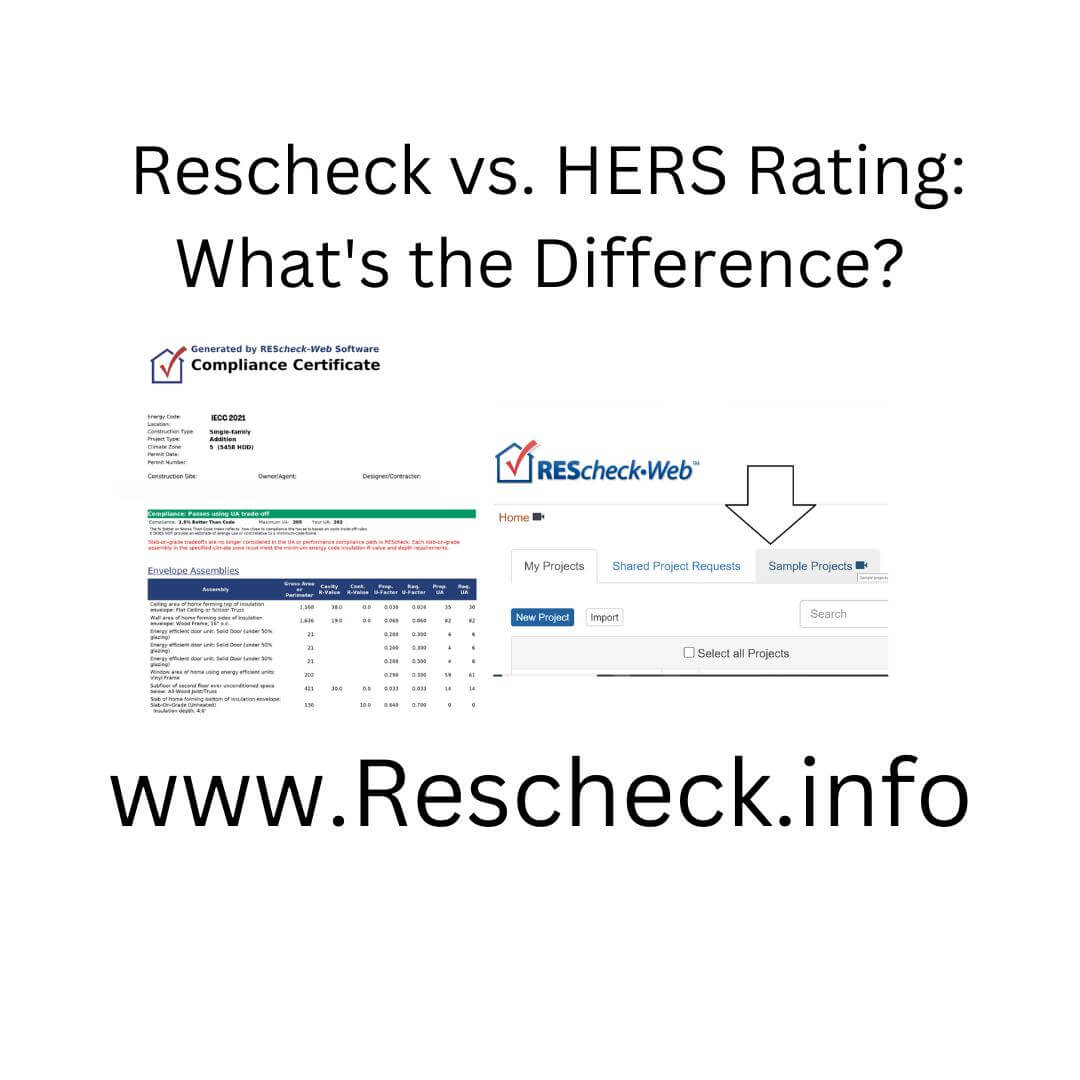
A Rescheck report is a detailed analysis of a building’s energy performance, specifically focusing on its compliance with local, state, and federal energy codes. It’s a mandatory requirement in many jurisdictions, especially for new construction and major renovations.
Key Features of a Rescheck Report:
- Code Compliance: Ensures that a building meets specific energy code standards. Example IECC 2018 Rescheck, IECC 2021 Rescheck, IECC 2024 Rescheck.
- Energy Efficiency: Provides a baseline assessment of the building’s energy performance.
- Compliance Certification: Serves as official documentation for regulatory bodies.
What is a HERS Rating?
A HERS (Home Energy Rating System) Rating is a standardized system for measuring a home’s energy efficiency. It provides a numerical rating, with lower numbers indicating higher efficiency. This rating can be used to compare the energy performance of different homes.
Key Features of a HERS Rating:
- Comparative Analysis: Allows for comparison of energy efficiency between homes.
- Energy Efficiency Benchmark: Provides a benchmark for energy performance.
- Energy-Saving Potential: Identifies areas for improvement and potential energy savings.
Key Differences Between Rescheck and HERS:
| Feature | Rescheck | HERS Rating |
|---|---|---|
| Purpose | Compliance with energy codes | Overall energy performance assessment |
| Scope | Primarily focused on code compliance | Comprehensive evaluation of energy efficiency |
| Output | Certification of code compliance | Numerical rating indicating energy efficiency |
| Usage | Mandatory in many jurisdictions | Voluntary, but often used for marketing and efficiency improvements |
How to Use Both Effectively:
While Rescheck is essential for regulatory compliance, a HERS Rating can provide a more comprehensive understanding of your home’s energy performance. By combining the two, you can:
- Identify Energy-Saving Opportunities: Pinpoint areas where energy efficiency can be improved.
- Make Informed Decisions: Use data-driven insights to make informed choices about energy upgrades.
- Increase Property Value: Energy-efficient homes often command higher market values.
- Reduce Environmental Impact: Contribute to a more sustainable future by reducing energy consumption.
By understanding the differences between Rescheck and HERS, you can make informed decisions to improve your home’s energy efficiency and reduce your environmental impact.
Rescheck.info can offer a Rescheck report for $79. We do not offer HERS ratings. To get a Rescheck started we need PDF plans, jobsite address, and square footage.